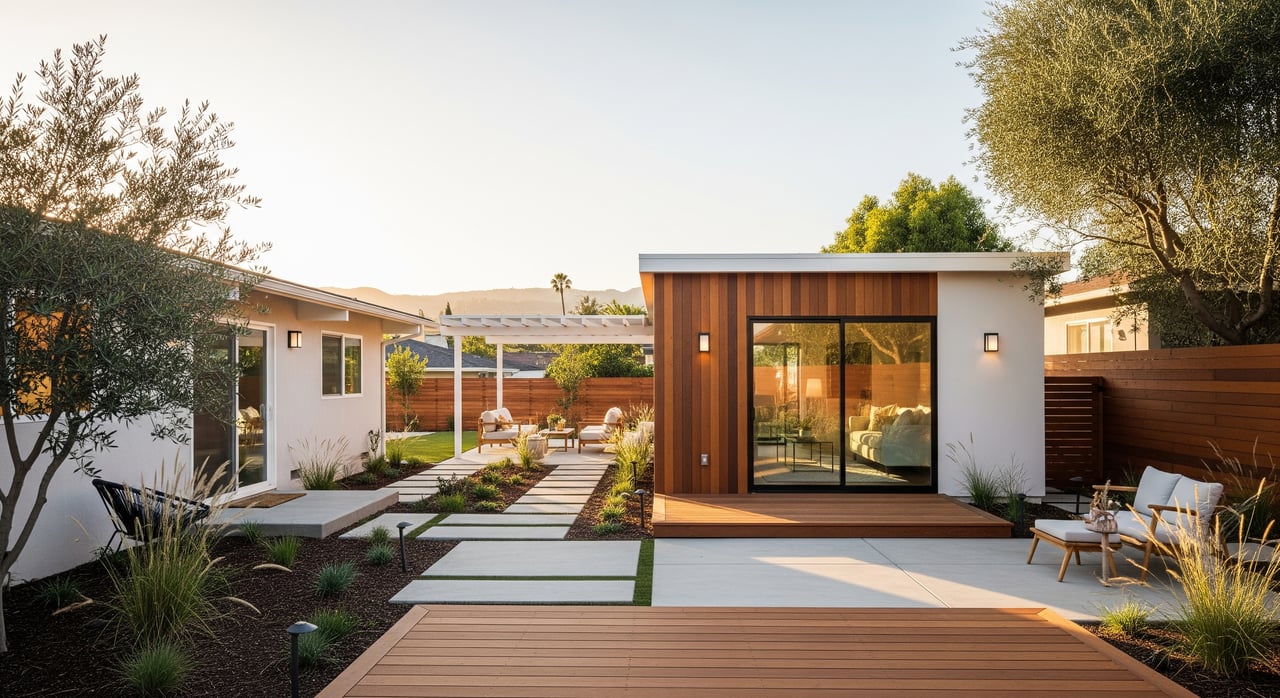
Thinking about turning your garage into a guest suite or building a rental in the backyard? If you live in Sherman Oaks, an ADU can add flexibility, potential income, and long-term value. The rules are clear enough to make planning feasible, but the details still matter. In this guide, you’ll learn how ADUs work in Los Angeles, what to check on your lot, how they can affect value and taxes, and what to prepare before you meet a designer or the city. Let’s dive in.
ADU types in California
California recognizes several ADU formats you can use to fit your lot and goals:
- Detached ADU: A separate structure in the rear yard. Garage conversions that become stand-alone units can fall here depending on attachment.
- Attached ADU: An addition or a unit connected to your main home.
- Junior ADU (JADU): A compact unit within the footprint of the existing home, typically capped around 500 square feet in many jurisdictions.
- Conversion ADU: A conversion of existing space such as a garage, basement, or other legal accessory structure.
State policy is designed to increase housing supply while using objective, ministerial approvals for compliant projects. That means no discretionary hearings when your design meets the city’s clear standards.
How Los Angeles reviews ADUs
Los Angeles follows the state’s ministerial approach. If your plans meet objective standards for size, height, setbacks, parking, and design, your submittal proceeds through plan check rather than public hearings.
Key agencies you will interact with include:
- Los Angeles Department of Building and Safety for plan check, permits, and inspections.
- Los Angeles City Planning for zoning and overlay questions.
- Los Angeles Department of Water & Power for water and electrical capacity or upgrades.
- LA Sanitation & Environment for sewer connections and permits.
- LA Housing Department for rent-stabilization and tenant rules if you plan to lease.
- Los Angeles County Assessor for property tax implications.
The typical sequence is straightforward: early consultations and a site plan, then design and engineering, ministerial plan check, permits, inspections, and final occupancy. Additional reviews may apply for grading, sewer, fire, or hillside conditions.
What Sherman Oaks lots often allow
Sherman Oaks includes many single-family parcels with rear yards and detached garages, which are strong candidates for ADUs. You’ll see three common solutions: a garage conversion, an attached addition, or a detached rear-yard unit. Basement or attic conversions are possible when egress and light/ventilation meet code.
Some streets may be in Historic Preservation Overlay Zones or have neighborhood guidelines. In those areas, exterior changes can trigger added documentation or design review. Always confirm setbacks, easements, and overlays early so you can position the unit efficiently.
Size, setbacks, and parking basics
Los Angeles implements state-aligned standards that guide what you can build:
- Size: Detached ADUs commonly top out around 1,200 square feet under statewide norms, while JADUs are much smaller, often around 500 square feet. Exact limits depend on your zoning and LA’s objective standards.
- Setbacks and height: Reduced setbacks, such as 4 feet for certain detached ADUs, are often allowed. Height and placement must still fit your lot’s buildable envelope.
- Parking: Many ADUs are exempt from new parking if located near transit or created within existing structures like garages. On some single-family lots where exemptions do not apply, parking may be required.
Because standards vary by parcel, verify the exact numbers with City Planning and LADBS during pre-check.
Costs, timelines, and utilities
Budget and timing depend on scope and site conditions. A garage conversion is typically the most cost-effective because it reuses structure and utilities. An attached addition tends to be mid-range, and a new detached build is usually the most expensive due to foundations, utilities, and site work.
Expect timelines in phases: feasibility and design can run weeks to months, plan check and permitting often take weeks to a few months for fully compliant submittals, and construction can range from several months to a year. Permit, plan-check, and utility fees apply, with state rules limiting certain impact fees for small units, particularly under 750 square feet.
Coordinate with LADWP and LA Sanitation for service capacity and sewer connections. If your site involves grading, retaining walls, or hillside conditions, plan for extra review and contingency.
Value, taxes, and leasing considerations
An ADU can lift value by adding usable space and rental potential. The premium varies by neighborhood demand, quality of the unit, and whether the ADU is fully permitted. In the Valley’s family-oriented submarkets, buyers often value ADUs for multigenerational living as much as rental income, but sale premiums depend on local comparable sales and legal status.
Adding an ADU usually increases assessed value. The County Assessor will evaluate the improvement, which can raise your property taxes. If you plan to rent, confirm how the Los Angeles Rent Stabilization Ordinance applies to your property type and age, and understand local tenant protections. Short-term rentals are regulated in Los Angeles and may be restricted or require registration.
Design and livability essentials
A well-designed ADU feels independent yet connected to the property’s overall rhythm. Consider:
- Privacy and sightlines: Place windows, entries, and fencing to protect privacy between the main home and the ADU.
- Access and safety: Provide a clear, well-lit path, address steps and grades, and plan for accessibility needs.
- Storage and parking: Preserve storage in the main home and allow for bikes or EV charging where practical.
- Multigenerational comfort: Single-level layouts, larger bathrooms, sound insulation, and thoughtful HVAC improve long-term usability.
- Energy and code: Title 24 energy standards apply. Insulation, efficient systems, and potential solar requirements affect design and cost.
Feasibility checklist for your first meeting
Bring these items to early talks with the city or your designer:
- Parcel number, site plan or plot map, and any prior permits or remodel records.
- Photos of the house, garage, and rear yard. A recent survey or topographic map if slope is a factor.
- Zoning designation, lot dimensions, and known setbacks or easements.
- Utility information: where water, gas, sewer, and electrical lines are located, and whether there is alley access.
- Tree locations, any HPOZ or special overlay, and current off-street parking count.
Questions to ask:
- Will my concept qualify for ministerial approval under current LA rules?
- Which ADU types fit my lot given setbacks and easements?
- Do any parking exemptions apply due to transit proximity or a garage conversion?
- What permit, utility, and potential impact fees should I expect, and which departments must sign off?
- Are there HPOZ or design considerations that affect exterior work?
- What budget range and contingency should I plan for, and what are the timeline milestones?
- How will improvements affect assessed value and taxes?
Documents to request from your designer or builder:
- Preliminary site plan and conceptual floor plan showing size and placement.
- A ballpark cost estimate with hard costs, soft costs, and contingency.
- A draft project timeline for design, permits, and construction.
- References and examples of ADU work in Sherman Oaks or nearby neighborhoods.
When an ADU makes lifestyle sense
If you want a flexible guest suite, a private studio, or a place for aging parents or adult children, an ADU can solve for space without leaving the neighborhood. It can also create a secondary income stream when leased long term. The tradeoffs are real: you give up yard space, take on construction and ongoing maintenance, and manage privacy. A clear plan, professional design, and early agency conversations will help you balance the benefits and commitments.
Ready to evaluate options on your property or position an existing ADU for maximum resale value? For discreet guidance tailored to Sherman Oaks, connect with Tori Barnao to Request a Confidential Market Consultation.
FAQs
How large can an ADU be in Sherman Oaks?
- Detached ADUs commonly cap around 1,200 square feet under statewide norms, while JADUs are much smaller, often about 500 square feet, with exact limits set by Los Angeles standards.
Do I need to add parking for an ADU in Los Angeles?
- Parking may be waived in several cases, including proximity to transit or conversion of existing structures like garages, but some parcels without exemptions may still require a space.
How long does ADU permitting take in Los Angeles?
- For compliant plans, ministerial plan check often runs weeks to a few months, followed by construction that can span several months to a year depending on scope.
What does an ADU typically cost compared to other options?
- A garage conversion is usually the most cost-effective, an attached addition is mid-range, and a new detached ADU is generally the most expensive due to foundations, utilities, and site work.
Will an ADU increase my property taxes in Los Angeles County?
- Yes, most improvements lead to reassessment of the added value by the County Assessor, which can raise your property tax bill.